How to Play Kabloom
The round
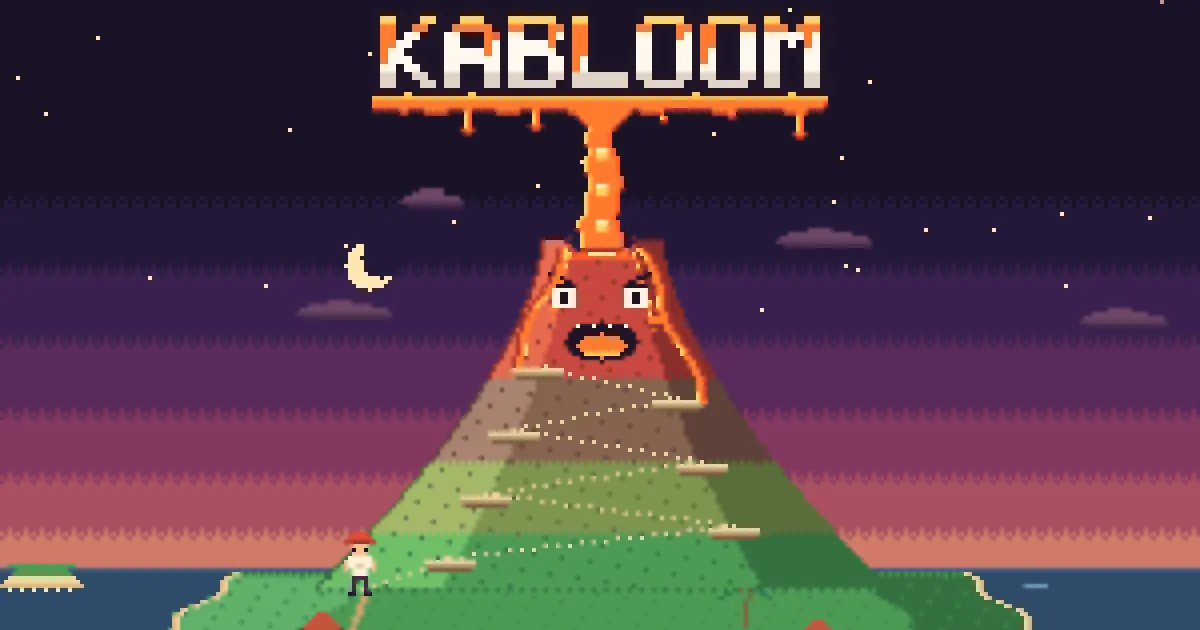
Kabloom is a free browser trivia game by Thomas Bijvoets. One puzzle a day, seven questions, one theme. Each question gives you 25 seconds. The clock starts two seconds after the prompt appears, so you get a short beat to read.
Answers cannot be reused. A wrong guess, or a repeat, is pushed back and you can try again. Only the timer ends the question. The public rules also say the volcano may ask “Did you mean…?” before a near-miss counts, and an answer that is not in the list is named as missing without costing the question. A film on a country day is flagged as the wrong kind of answer, and you can try again.
You get one run of the daily puzzle. Clearing all seven lets you share the result. No app or installer is required. The current official pages direct players to the browser game and do not link a Steam release. The site publishes a web app manifest, so a browser can pin it, and that is still the same page.
Rule evidence
| Rule | Value | Status |
|---|---|---|
| Current format | 7 questions; 25 seconds per question; answers cannot repeat | Official rules · 1 source |
| Reset | Midnight in New York | Official rules · 1 source |
| Platform | Browser; no installation required by the linked official game | Official site · 1 source |
| Monday / Tuesday / Wednesday | Countries / Celebrities / Nature | Official rules · 1 source |
| Thursday / Friday / Saturday / Sunday | Science / Films / History / TV shows | Official rules · 1 source |
| Progress and account storage | Local browser progress; signed-in results saved with the account | Official privacy · 1 source |
When it resets
The public rule is midnight in New York, for everyone at once. On 15 Nov 2026 New York was on standard time (UTC−5), so that midnight is 05:00 UTC. I converted the clock from that rule. It is not a table the game prints.
| Place | Local time of the reset |
|---|---|
| New York | 00:00 |
| London | 05:00 |
| Berlin | 06:00 |
| India | 10:30 |
| Singapore | 13:00 |
| Tokyo | 14:00 |
| Sydney | 16:00 |
| Los Angeles | 21:00 the previous evening |
When New York is on daylight time (UTC−4), its midnight is 04:00 UTC. Other cities change clocks on their own schedules, so their local reset time must be converted for the date; do not subtract one hour from every row above.
Weekday themes, and the archive that does not match
The how-to-play page lists Monday countries, Tuesday celebrities, Wednesday nature, Thursday science, Friday films, Saturday history, Sunday TV shows. The explained archive does not follow that list for the first two weeks. Cities, video games, and general knowledge all showed up. I leave both lists on the site: the weekday row is the stated rule, and each past day keeps the label on its explained page. Nature has no explained day yet, so I do not fill that day with sample answers.
The answer pool, as the same page describes it, covers 193 UN member states plus Vatican City, and it says Kosovo, Taiwan, and England are not in the country list. Films, shows, games, songs, albums, bands, books, brands, cities, landmarks, animals, and geography sit beside a large people list. Country facts are credited there to the CIA World Factbook, with handmade checks against Wikipedia, and the big lists to Wikidata ordered by how many Wikipedia languages mention the thing.
Streaks and stats stay in the browser if you do not sign in. A signed-in run is stored with the account. That split is on the game’s own privacy page. For how the famous answer gets used up, see how to score higher. For what the paid mode adds, see what Unlimited adds.
FAQ
How many questions are in Kabloom?
Seven questions, all on the same theme, once per day.
When does Kabloom reset?
At midnight in New York, the same moment everywhere else.
Is there a Kabloom app or Steam download?
The current official pages direct players to the browser game; no app or installer is required, and they do not link a Steam release. The 2009 student game is a separate download.
Sources
- Kabloom how to play — checked 2026-11-18
- Kabloom about — checked 2026-11-15
- Kabloom privacy — checked 2026-11-15
- Explained #19 — checked 2026-11-15